Basic Designated Marksman (DM) Training Program
Duration: 5 Days
Focus: Precision marksmanship fundamentals, high-stress scenarios, and tactical adaptability.
Course Purpose
Utilizing a rigorous Program of Instruction (POI) in precision marksmanship, this 5-day course is engineered to elevate a shooter’s capabilities under operational pressure. Training emphasizes stress shooting, precise shot placement, angle firing, and night operations using field-proven methodologies.
Defining the Designated Marksman
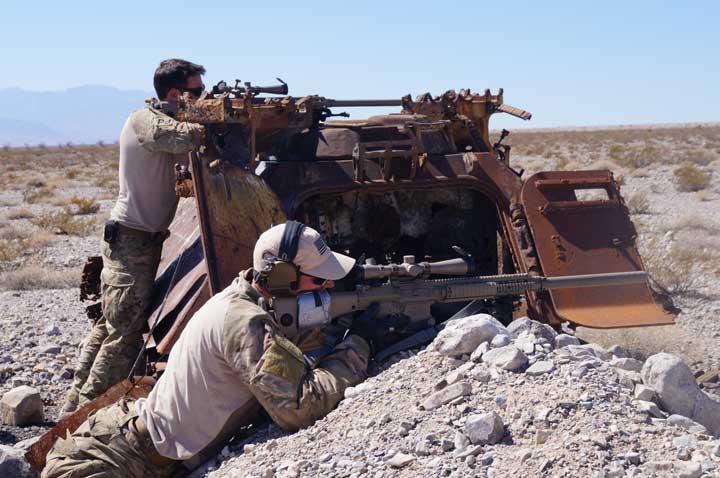
The Designated Marksman (DM) is an operator with advanced training in marksmanship fundamentals and tactical observation. Embedded directly within a team or unit as an additional duty, the DM is equipped with a precision optic mounted on a Special Purpose Rifle (SPR).
Unlike a traditional sniper, the DM is not deployed as a solitary asset or in a specialized unit. Instead, the DM provides immediate, discriminating direct fire on positively identified threats to support unit personnel and neutralize targets of opportunity.
Core Curriculum & Fundamental Skills
- Tactical Execution: Safety, Combat Mindset, Communication, and Moving Targets.
- Ballistics & Environment: Terminal Ballistics, Atmospherics, Range/Wind Estimation, Group Analysis, and Zeroing.
- Specialized Additions (Upon Request): Data Book utilization and the SOCOM DM Training Qualification.
Urban Application & Operational Mission
In urban environments, the DM delivers immediate, on-command precision fire, requiring the Team Leader to maintain direct proximity to the asset. Adhering to modern Rules of Engagement (ROE), the DM provides the exact, discriminating fire necessary to mitigate collateral damage and protect civilian lives.
Typical DM Missions Include:
- Conventional Assault Fire Support
- Civil Disturbance Operations
- Area Denial in Defensive Postures
- Search and Rescue (SAR) Security Team
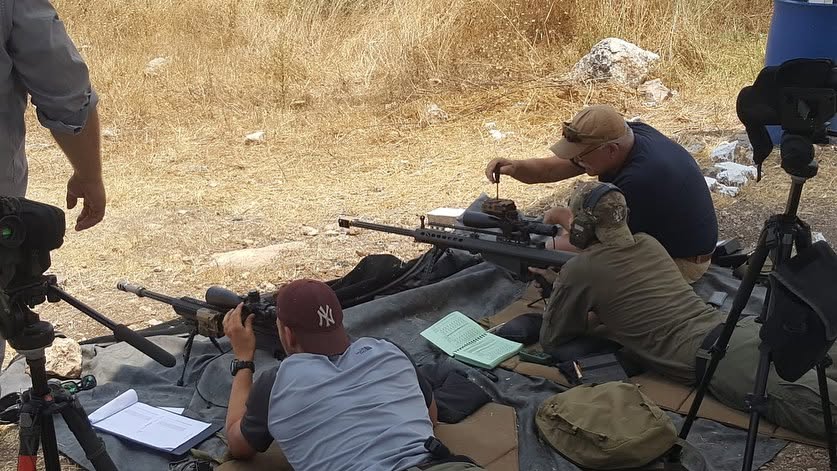
DM vs. Sniper: Key Differences
While some fundamental skills overlap, the role, weapon system, and deployment strategy differ significantly:
| Feature | Designated Marksman (DM) | Traditional Sniper |
| Primary Mission | Embedded within a squad to provide immediate tactical fire support. | Independent, specialized long-range engagement and reconnaissance. |
| Weapon System | Standard-issue Special Purpose Rifle (SPR) equipped with a precision optic. | Highly specialized, dedicated long-range precision weapon systems. |
| Ammunition | Standard-issue duty ammunition (ensuring weapon versatility in close-quarters). | Match-grade, highly specialized, or custom long-range ammunition. |
Basic DM Course Outline
Day 1: Fundamentals & Alignment
- Morning Warm-Up: Range & Wind Estimation (30 Mins, Field Exercise)
- Academics: Range & Wind Estimation, Aiming & Sight Picture, Trigger Control, Shooting Positions, Ballistics & Atmospherics, Effective Data Book Utilization.
- Lunch (On-Site to maximize training time)
- Range Time: Optic Alignment, 100M Zeroing, Grouping, and Calling Shots.
Day 2: Advanced Optics & Team Techniques
- Morning Warm-Up: Range & Wind Estimation (30 Mins, Field Exercise)
- Academics: Reticles & Focal Planes, Milling Targets, Team Firing Techniques, Barricades & Vehicles, Unknown Distance (UD) Targets, Elevated Positions, Moving Targets & Leads, Spotting Techniques.
- Lunch (On-Site)
- Range Time (100M & UD Range): Practical application of Team Firing, Barricades/Vehicles, Unknown Distance Targets, Elevated Positions, and Spotting.
Day 3: Tactical Scenarios
- Range Time: 100M Zero Verification, Cold Bore Shot Validation, Multiple Targets at Unknown Distances, Vehicle & Barricade Engagements.
- Lunch (On-Site — No off-site travel permitted)
- Range Time: Dedicated Designated Marksman Tactical Scenarios.
Day 4: Performance Review & Challenges
- Classroom: Data Book Review, Trend Analysis, Groupings, and Atmospheric Adjustments.
- Range Time: 100M Zero, Grouping, and Calling Shots.
- Lunch (On-Site — No off-site travel permitted)
- Range Time: Team Integration Exercises and Single Shooter Challenges.
Day 5: Operational Application
- Field Execution: Minimum of three (3) Full Mission Profiles (FMPs).
Advanced Designated Marksman (DM) Training Program
Duration: 3 Days
Focus: Intense stress environments, advanced ballistics, and thermal/night operations.
Prerequisite: Weapon-mounted thermal optic required.
Course Purpose
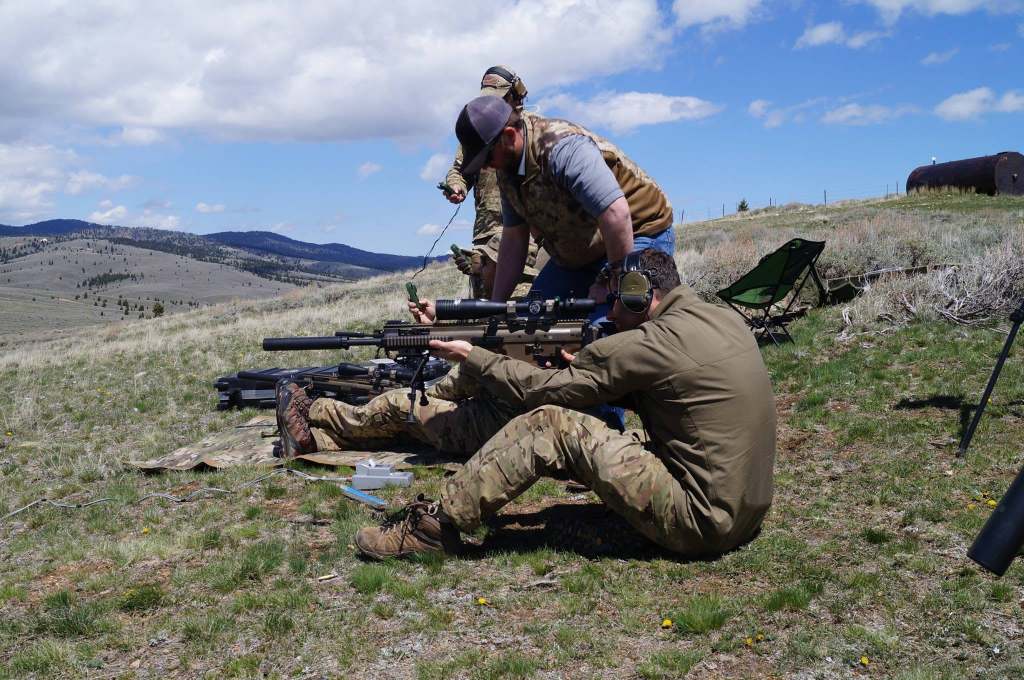
This advanced 3-day course builds directly upon basic DM principles, shifting focus toward high-intensity stress shooting, precision shot placement under duress, extreme high/low-angle firing, and complex night-time operations.
Customization: This course is fully tailorable to meet the specific operational requirements, doctrines, and environments of your department or agency.
Student & Equipment Requirements
Required Gear & Hardware
- Weapon System: 7.62 / .308 / .300 Win Mag rifle equipped with a bipod and optics capable of engaging targets out to 800 meters.
- Ammunition: 300 rounds of match-grade ammunition.
- Tools: Calculator, mechanical pencils, and a Mildot Master.
- Data & Logistics: Data Book complete with range cards, a ballistic table appropriate for your specific duty round, and Unknown Distance Data Sheets.
- Note: Pre-assembled data books containing pre-printed data pages and a ballistics whiz wheel are available upon request with a 30-day advance notice (can be used in lieu of a Kestrel).
- Apparel & Field Gear: Rucksack with hydration system, ammo carrier, shooting mat (optional), gloves, wrap-around eye protection, hearing protection, rifle sling (optional), and a complete cleaning kit.
- Advanced Equipment:
- Kestrel® with Ballistic Program OR an Accuracy 1st Whiz Wheel. Whiz Wheels must be pre-ordered so weapon-specific characteristics can be calibrated to determine proper DOPE. Eight (8) specific variables must be identified prior to ordering.
- Accuracy 1st Shooting Rest Bean Bag.
- Advanced DM Students Only: A weapon-mounted thermal imaging device is mandatory.
- Communications: Teams participating must bring operational radios for each team member. Frequencies suitable for inter-team communication should be coordinated prior to arrival. An additional radio must be provided for the FMP Coordinator.
Required Prerequisite Academics
To maximize range time, students must possess a firm understanding of the following concepts prior to day one:
- Measurement Units: A foundational understanding of Mil-Dot and MOA units of measurement. Review Resource.
- Data Books: Proficiency in setting up and maintaining data tracking. Review Resource.
Mandatory Pre-Course Preparation
Please ensure the following three tasks are completed before arriving at the training facility:
- Identify Optic Specifications: Confirm the exact make and model of your optic. Determine your reticle type (MOA vs. MIL) and whether it is a First Focal Plane (FFP) or Second Focal Plane (SFP) system. (e.g., Leupold Mark 8, Mark 6, and Mark 4 ER/T models are Front Focal Plane; most others are Rear Focal Plane). If uncertain, contact your manufacturer directly:
- Leupold: 1-800-538-7653 | productspecialist@leupold.com
- Nightforce: 706-434-8953 | MilitaryInfo@nightforceoptics.com
- Horus Vision: 650-588-8862 | info@horusvision.com
- Schmidt & Bender: 603-287-4830 | info@schmidtbender.com
- Optic Mounting & Leveling: Ensure your optic is securely mounted and perfectly level to the rifle’s bore axis using a bubble level (ensuring the horizontal reticle line is perfectly parallel to the ground).
- Standardize Systems of Measurement: If attending as an agency or unit, unify your team on either Meters/MILs or Yards/MOA before arrival. Standardizing your data greatly accelerates the learning process and maximizes live-fire trigger time.

